



The Crime Desk: In the face of the mass uprising of students, the Nobel-winning professor Dr. Interim government led by Muhammad Yunus. The government has already started contacting various foreign agencies for help to bring back the laundered money. This information was informed in a press release sent from the press wing of the interim government’s chief adviser on Wednesday.
On the other hand, prominent economist and special fellow of the Center for Policy Dialogue (CPD) Dr. A committee has been formed headed by Devapriya Bhattacharya. Yesterday, the Director General (Administration) of the Office of the Chief Adviser. A notification in this regard has been issued under the signature of Ahsan Kibria Siddiqui. The name of the committee formed is ‘White Paper Preparation Committee on the Existing Economic Status of Bangladesh’. The committee will report to the chief adviser within 90 days.
It was informed in the notification, Dr. The government has decided to form a committee headed by Devapriya. He shall nominate other members of the committee with the approval of the chief adviser. Later, the list of other members of the committee was given to the media by the chief adviser’s press wing.
Name of White Paper Drafting Committee Member
The members of the white paper drafting committee are Prof. AK Enamul Haque, Dean of the Faculty of Business and Economics, East West University, Ferdous Ara Begum, Chief Executive of Business Initiative Leading Development (BUILD-BUILD), BRAC Institute of Governance and Development (BIGD), BRAC University—its executive director Imran Matin, senior research fellow of Bangladesh Institute of Development Studies (BIDs). Kajal Iqbal, Professor of BUET. Tamim, Professor of Development Studies Department of Dhaka University. Mohammad Abu Yusuf, CPD Fellow Professor Mostafizur Rahman, Dhaka University Economics Department Professor Dr. Salim Raihan, Professor of Economics Department of Jahangirnagar University. Sharmin Nilarmi, former teacher of the political science department of Dhaka University. Tasnim Arefa Siddiqui and the former chief economist of the World Bank. Zahid Hossain.
Who has embezzled how much money is being calculated?
The press release sent by the press wing of the Chief Adviser on recovery of smuggled money and embezzlement of loans from banks informed that during the regime of the Sheikh Hasina government, some dishonest businessmen and influential persons have embezzled money anonymously.
Some unscrupulous businessmen and influential persons have in recent years, through widespread corruption and fraud in the banking sector, embezzled large sums of money anonymously and smuggled it abroad, whose right
Quantification is ongoing. It is mentioned in the notification that the amount of this embezzled money can be estimated to be more than lakhs of crores of rupees.
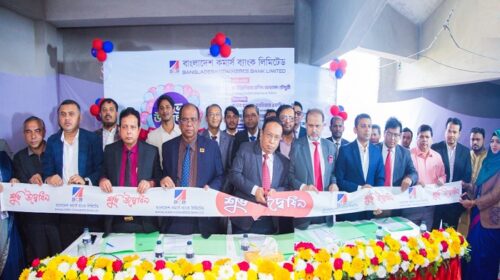
Without mentioning the names of the influential persons, the press release said that the reform process has already started in the banks and financial institutions associated with such corruption and money laundering. In the meantime, the boards of Islami Bank, Social Islami Bank, National Bank, United Commercial Bank, Global Islami Bank, and Union Bank have been reconstituted. The reform process will begin in the remaining banks and financial institutions. The actual information of these embezzled funds will be collected through the new management authority, and the audit process will be started to determine the actual amount of money embezzled through them.
Asset acquisition will be done with the help of BFIU, CID, and ACC.
The chief advisor said that the government’s strict attitude towards the prosecution of money embezzlers. According to Yunus’ office, with the help of the new management authority of the banks, Bangladesh Bank’s ‘Bangladesh Financial Intelligence Unit (BFIU), Police Criminal Investigation Department (CID), and Anti-Corruption Commission (ACC), embezzlers are being acquired by local assets and repatriation of money laundered abroad. Work has started to recover the embezzled money.
Bank commission is coming soon.
Referring to the formation of a bank commission soon, the chief adviser’s office said the commission will investigate the true picture in each bank involved and prepare an implementable roadmap within six months for the restructuring of the banks.
It is mentioned in the circular that the aim of Bangladesh Bank and the government is to build a strong banking sector capable of complying with all international standards. However, time, international technical assistance, and money will be required to achieve this objective from start to finish. Bangladesh Bank and the government are undertaking activities aimed at acquiring domestic and foreign assets of money embezzlers and rehabilitating the banks by bringing them back from abroad. This restructuring of banks and structural reform of the financial sector will take time. However, the government is determined to bring Bangladesh’s financial sector up to international standards.
Scope of work of the White Paper Drafting Committee
The notification signed by the Director General (Administration) of the Office of the Chief Adviser specified the six terms of reference of the White Paper Drafting Committee and other matters. These are: the described white paper will have an overall picture of the existing economy of the country as well as the government’s strategic actions on economic matters, the implementation of the Sustainable Development Goals (SDGs), and reflection on the transition from LDCs; Committee members shall serve unpaid; the office of the committee will be located at the Planning Commission Complex; the General Economics Division of the Planning Commission will provide secretarial support to the committee; all ministries, departments, offices, and organizations of the government will provide all kinds of cooperation, including providing necessary information as per the demand of the committee; and the committee will hand over the report with recommendations to the Chief Advisor of the interim government within 90 days.
As stated in the concept paper of the white paper
On August 21, the chief adviser’s office informed me about the preparation of the concept paper for the preparation of this white paper. It was informed about the concept paper that the economy of Bangladesh has faced multi-dimensional challenges for the last one and a half decades. Due to the extreme economic mismanagement of the previous government, corruption, money laundering, and the taking of local and foreign loans by taking ineffective projects, the economic situation has become very critical. Sources from the finance department revealed in the newspaper that Sheikh Hasina’s government left a debt of Tk 1.836 billion during the collapse. The debt status as of last December is equal to the total allocation of the three budgets of Bangladesh. On the other hand, the previous government resorted to both domestic and foreign borrowing rather than trying to raise government revenue through domestic sources of taxation to cover the budget deficit.
The concept paper-related circular also informed that although the Seventh Five-Year Plan targeted tax collection at 14 percent of GDP, the ratio has declined from 11 percent to 8 percent in the last six-seven years. This is only one aspect of economic mismanagement. As a result of overall corruption, free scope for money laundering, market syndicates, etc., the daily life of the common man becomes unbearable. According to the Bangladesh Bureau of Statistics (BBS), headline inflation was around 12 percent last July. Food inflation is even higher, exceeding 14 percent. It can be said that during the last period of the previous government, the economy of Bangladesh was facing a lot.
It is said that the current interim government has to take the responsibility of managing the state in the unprecedented fragile situation of the economy of Bangladesh caused by the total mismanagement of the previous government. Challenges facing the interim government in consolidating the country’s economy: Among these are mainly structural reforms to resolve long-standing problems besides reviving the economy, strengthening the capacity of regulatory institutions, eliminating corruption, restoring stability in the banking and financial sector, reforming tax and customs policies, and attracting foreign investment. An overall picture of the economic condition of Bangladesh when the interim government takes over should be in the hands of the government at the outset of addressing these challenges. For this purpose, various stakeholders will be consulted during the preparation of the white paper.
Six priorities in the White Paper
The White Paper mainly proposes to shed light on six issues. These are: public finance management, inflation and food management, external balance, power and energy, private investment, and employment.