



International Desk: Security forces in Bangladesh have carried out extrajudicial killings and other human rights violations. This information has emerged in the Bangladesh section of the report entitled ‘Country Reports on Terrorism-2022’ published by the United States on Friday (November 2).
The Bangladesh part of the report is highlighted as follows:
Brief description:
2022 saw few incidents of terrorist violence in Bangladesh, with authorities continuing to pursue militants. Especially the al-Qaeda-sanctioned group, Jamaat-ul-Mujahideen (JMB), and the ISIS-affiliated JMB offshoot, Nawa JMB. Prime Minister Sheikh Hasina and other government officials have often emphasized Bangladesh’s zero-tolerance policy against terrorism, although Bangladesh continues to deny the presence of globally organized jihadist militant groups such as Al-Qaeda and ISIS. In October, Bangladeshi authorities announced an operation to destroy Jamaatul Ansar Fil Hindal Sharqiya (JAHS), an al-Qaeda-inspired group. US-trained Bangladeshi police have arrested dozens of suspected terrorists. However, other elements of the security forces have carried out extrajudicial killings and other human rights violations.
Terrorist incidents in 2022 include:
Last October, Bangladesh’s counter-terrorism Rapid Action Battalion (RAB) announced an operation in the Chittagong Hill Tracts to train an al-Qaeda-inspired group to carry out attacks elsewhere. Authorities allege that JAHS cooperated with the ethnic separatist militant group Kuki-Chin National Front. Authorities announced the arrests of dozens of JAHS members throughout the rest of the year.
Moinul Hasan Shamim and Abu Siddique Sohail, who were convicted in the case of the murder of publisher Faisal Arefin Dipan in connection with the attack on Dhaka’s Chief Judicial Magistrate building in 2015, were released by the militants on November 20. Authorities charged 20 suspected members of the outlawed al-Qaeda affiliate Ansar al-Islam with planning or helping to execute the escape. The released accused were absconding at the end of 2022.
Law, Law Enforcement, and Border Protection:
The Anti-Terrorism Act of 2009 (as amended) remains the basis for the arrest and detention of terrorist suspects. According to the Digital Security Act (DSA) 2018, police can arrest ‘extremists’ who promote, finance, radicalize, recruit, or distribute hate speech online. Domestic and international critics claim that the DSA is mainly used to target, harass, and arrest government critics.
Dhaka Metropolitan Police’s Counter-Terrorism and Transnational Crime Unit (CTTCU), the National Police’s Anti-Terrorism Unit (ATU), and RAB continued operations against suspected terrorists. CTTCU investigated 27 cases, conducted 27 raids, and made 61 arrests. Chittagong Metropolitan City Police have arrested several people in response to multiple incidents. The ATU, while continuing to develop its nationally mandated CT capacity, increased its performance, completing 27 investigations and conducting 42 operations. As a result of this, 45 people have been arrested. Other city-related units include Forces Intelligence’s Counter-Terrorism Investigation Bureau, Border Guards, Special Branch, Aviation Security, Airport Immigration Police, and the Airport Armed Police Battalion. Everyone worked independently.
Bangladesh has supported the United States in strengthening internal security and countering terrorism. The US government provided various forms of support to the CTTCU, ATU, and other police units around the country. The US government has also trained Anti-Terrorism Tribunal (ATT) judges and prosecutors to handle evidence, conduct investigations, and prosecute terrorist and terrorist financing cases. The Special Weapons and Tactics Divisions of RAB and CTTCU are ineligible for assistance due to restrictions.
Bangladesh has land and sea border patrol capabilities and has improved cargo and passenger screening with updated equipment, procedures, and increased personnel. Bangladeshi authorities have made significant improvements in port security, particularly at Bangladesh’s main port of Chittagong. Bangladesh authorities have undertaken plans to implement effective security measures at a new international airport terminal currently under construction in Dhaka and procured appropriate, high-quality equipment. Both the airport and the port authority were enthusiastic about collaborating with the US government to improve port and airport security.
Bangladesh shares information with Interpol but has no national terrorist watchlist. The Special Branch has its own internal watchlist, which grants read-only privileges to the Director General of Forces Intelligence and the Director General of National Security Intelligence. A US ‘Watch List’ project will be run by the Special Branch in coordination with TU, CTTCU, and Metropolitan Police. Bangladesh does not systematically use API or PNR data for passenger screening before flight arrival.
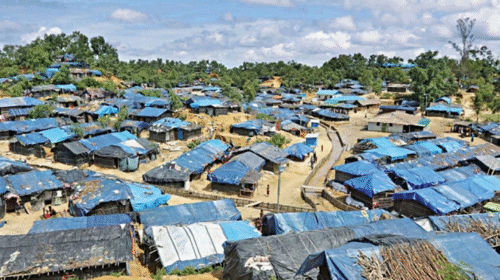
Bangladesh is sheltering more than 1 million Rohingya refugees. Violence in the camps remained a concern, however, and Bangladeshi officials publicly raised the possibility that refugees would recruit radicalized terrorist groups and increase violence. However, in 2022, there was no information about a significant terrorist threat from the camps.
The AT has sentenced seven terrorists to death for their involvement in the 2016 Holy Artisan Bakery terror attack. The Supreme Court has yet to rule on their petition. The seven ATTs had about 680 caseloads, a slight decrease from 2021. An Indian National Intelligence Agency (NIA) court has sentenced IS and JMB member Mohammad Masiuddin, alias Abu Musa, to life imprisonment for his involvement in the 2014 IED blast in India’s Khagragarh.
In Sylhet last March, the ATT sentenced four people to death for the 2015 murder of blogger and writer Anant Vijay Das. In August 2015, the ATT sentenced five members of the banned militant organization JMB to death in connection with the bomb blast at the Chittagong naval base.
Prevention of the Financing of Terrorism:
Bangladesh is a member of the Asia/Pacific Group on Money Laundering. Its FIU, Bangladesh Financial Intelligence Unit, is a member of the Egmont Group. Not much has changed in 2022.
Countering Violent Extremism:
Police, academics, civil society organizations, and others are said to be continuing to draft a national counter-terrorism coordination strategy. But according to UN observers, this process may have stalled. CTTCU, think tanks, the United Nations, and universities collaborated to conduct CVE-related research on topics such as terrorist organization mapping, social profiling, motivational factors, and women’s radicalization. Bangladeshi institutions have continued cooperative activities through the Country Support Mechanism under the Global Community Engagement and Resilience Fund.
Violence in the prison system and radicalization by terrorists remain serious concerns. CTTCU and Dhaka University began developing an integrated deradicalization program from violence to be implemented in selected prisons in Bangladesh in 2023. Dhaka North, Dhaka South, and Narayanganj are members of the Strong City Network.
International and Regional Cooperation:
Bangladesh was active in the activities of the Organization of Islamic Cooperation in the city arena.