



The Crime Desk: In this year’s G-20 conference, India announced the goal of ‘Vasudhaib Kutumbakam, i.e., ‘One Earth, One Family, One Future’. It is considered an agenda based on global inclusion. India also has far-reaching ambitions to strengthen its influence in South Asia. The Modi government has big dreams around the G-20 summit in the Indian capital New Delhi on September 9-10, and several new countries, including Egypt, Mauritius, Nigeria, and Oman, will meet at this conference. Along with this, Bangladesh will participate for the first time as an additional guest country in this conference.
According to the report, Bangladesh, considered a strategic backwater for many years, is now part of the geopolitical global shift in the Indo-Pacific region. Bangladesh has a unique signature of extensive economic growth. It is also projected to become the 23rd largest economy by mid-century with a population of 160 million, the world’s 35th largest economy, and stable GDP growth rates. Besides, Bangladesh is an important regional hub for India. It connects the neighboring countries of Nepal, Bhutan, Myanmar, and China both by land and sea. That is why the Delhi authorities want to invest in Bangladesh to build regional resilience. This will create a balance of closeness with China.
The report also said that Bangladesh has already made a significant contribution to India’s tourism industry. The issue could also be seen as a commercial access point, with a connecting meeting between Japan, Bangladesh, and India in April this year. Even though the issue of common water rights has been controversial for a long time, India’s energy sector goals are aligned with those of Bangladesh. Last March, the two countries inaugurated a 130-kilometer pipeline to transport diesel from a hub in Siliguri, West Bengal, to Parbatipur, Bangladesh. Dhaka also had a lot of influence in suppressing the war in the northeastern region of India. Besides, it makes sense from India’s point of view to make Bangladesh the focal point of its neighborhood first’ policy.
Bangladesh’s border with Myanmar is positioned as a bridge between South Asia and Southeast Asia. Its location on the Bay of Bengal makes it a coastal state on the Indian Ocean, carrying an increasing amount of global trade. Those concerned said that many other countries want to spread influence in Bangladesh. Notable among them is China. The country has included Bangladesh as part of its Belt and Road Initiative.
The investment, growing trade and transport links, and political alignment are also seen as part of China’s strategy to build influence in the Indian Ocean and create an alternative route through the Malacca Strait. While the United States has expressed concern over Bangladesh’s electoral progress and human rights and is rumored to be calling for cooperation with the Quad, China’s non-interference policy and Bangladesh’s non-aligned policy have helped smoothen their relationship. Bangladesh was careful not to select a team.
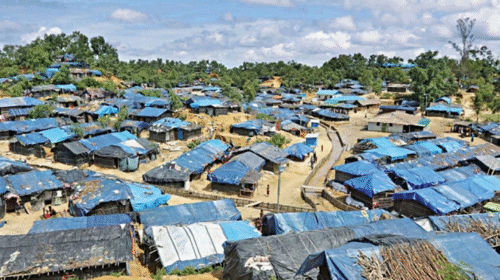
The country has maintained its ties with major powers, including Russia and the United States, while competing in the war in Ukraine. Besides, Bangladesh has its own priorities. Such as Rohingya refugees in the country, the need for local infrastructure, poverty alleviation, and other former colonies in the Global South, becoming players rather than tools in the game. Those concerned said that Dhaka will proceed with caution through multilateral platforms like the G-20.