



M Ruhul Amin: Even though the two eras of the much-discussed Chittagong Hill Tracts have ended, the hill tribes and resettled Bengalis are increasingly involved in mutual disputes over political discrimination, constitutional legal complications, land disputes, etc. In the last two eras, about 190 clashes took place between the four conflicting groups in the hills. 450 Pahari-Bengalis lost their lives in these clashes. More than 850 were abducted. Thousands of houses were burnt. Bengalis are afraid of a bigger conflict in the future.
Meanwhile, the Paharis are expressing their anger over the non-implementation of the peace agreement. They say, the clashes in the mountains so far after the peace accord remind us that even though the armed movement in the pursuit of peace ended two centuries ago, peace has not yet come to the hills. In the context of this incident, the Chittagong Hill Tracts Agreement and its subsequent flow of events in the hills should be viewed seriously.
looking back
The agreement was signed on 2nd December 1997 between Jan Sanhati Samiti on behalf of hill people and National Committee on Chittagong Hill Tracts on behalf of Bangladesh Government. The Agreement is divided into four sections: (a) General, (b) Hill District Local Government Councils, (c) Chittagong Regional Council and (d) Rehabilitation, Amnesty and other matters.
The then main opposition BNP and like-minded political parties strongly opposed the agreement. Before the agreement, BNP Chairperson Khaleda Zia warned that ‘If there is a peace agreement, I will give a tough program apart from strike’ (Ittefaq 16 November 1997). On December 7 (1997), 7 like-minded parties including BNP and Jamaat-e-Islami held a morning-evening hartal across the country to protest the Chittagong Agreement. In a press conference on December 3, BNP leader Khaleda Zia gave a 28-point argument for not accepting the agreement. He said, “Through this agreement, this government has abandoned the sovereignty of the country by withdrawing independent sovereign centralized power from one-tenth of the territory of Bangladesh and created a crisis of independence. At present, about 30 thousand Bengali families are living in the hilly areas. In 1982-83, the then government brought 26 thousand 220 families to the three hill districts of Chittagong (the hill people call them settlers) to settle the displaced people, including the river-devastated families from different parts of the country. Out of this, more than 20 thousand families were resettled in Khagrachari. The remaining families were resettled in Rangamati, Bandarban Hill District. The government allotted each of them five acres of land for homesteading and farming. As a result, a clash started with the mountaineers over the occupation of hilly land. Since 1986, as the number of attacks by the “peacekeeping force” increased, people began to move away to safety. About 10 thousand tribal families migrated to India at that time.
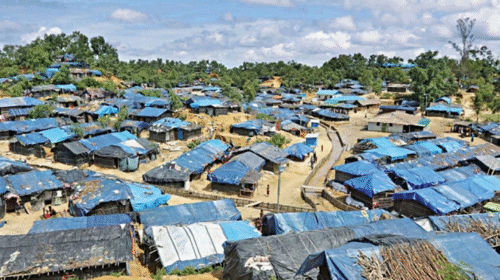
On the other hand, 26 thousand resettled Bengali family members stayed in 81 cluster villages adjacent to various army camps of Khagrachari to save their lives. After the peace agreement in 1997, the situation began to improve. Meanwhile, after the resettled Bengali families were brought to Guchchagram after leaving the houses built in the government special areas, they survived, but another difficult life struggle began. As the allotted space and houses in Guchchagram are very small, they have to live in piles. The number of these families living in only 500 places allotted per family keeps increasing.
In 1982, the government resettled 812 families in the hilly land of Sonamia Tila in Dighinala Upazila of Khagrachari. Due to the dire situation in ’86, they were temporarily relocated. After the peace treaty, when the refugees came from India, they had to leave their homes in the second phase.
Where is the main conflict?
Bengalis want to go back to their place. They want to live on the land allotted to them by the government. On the other hand, according to Paharis, this land is theirs. Traditionally, hilly land is always claimed by hilly people. They will not give the hill land to anyone. As a result, the hilly-Bengali conflict over land has been going on for years. Due to such location, clashes are happening repeatedly. About 190 clashes have taken place between the two rival groups in the hills in the last two centuries. 450 Pahari-Bengali people lost their lives in these clashes. More than 850 were abducted. Thousands of houses have been burnt.
Mountain deal in court docket
Chittagong Hill Tracts Regional Council Act was enacted in 1998. Besides, the Rangamati, Khagrachari and Bandarban District Local Government Parishad Amendment Act 1998 was enacted by amending the Hill District Council Act-1989. Challenging the validity of these two laws in 2000, resident of Chittagong Hill Tracts. Badiuzzaman wrote a writ in the High Court. Later in 2004 challenged the validity of the peace agreement and wrote a supplementary petition. Badiuzaman
The court issued its ruling on August 1, 2004. Last in 2007, Supreme Court lawyer Tajul Islam filed another writ in the High Court regarding the Hill Agreement. On August 27, the court issued the ruling. In the beginning of 2010, the hearing on the ruling of the two writs began and after the final hearing of the ruling, on 12 April, the court ruled that most of the clauses of the Chittagong Hill Tracts Agreement were unconstitutional.
For the implementation of Chittagong Hill Tracts Peace Agreement, the then Awami League government created a 3-member Agreement Implementation Committee. The then Awami League government established the Chittagong Hill Tracts Land Commission in the light of the hill agreement. Besides, the first in the history of Chittagong Hill Tracts appointed a Pahari as the Chairman of Chittagong Hill Tracts Development Board.
After the agreement, disagreements arose between the government and the Jansa Sanhati Samiti over its implementation process. At one point, the distance between Jyotirindra Bodhipriya Larma (Santhu Larma) and Jana Sanhita leader and regional council chairman over the implementation of the agreement grew. Among them, JSS opposed Awami League in 2001 elections.
Mountain agreement during the four-party coalition government
On the eve of the implementation of the Chittagong Hill Tracts Agreement, the then BNP Secretary General said in a discussion meeting, ‘No agreement is made abroad without taking the opinion of the opposition party. What will happen to this agreement when the Awami League is not in power? (Vorer Kagaz, 6 December 1997) It was clear then that Mannan Bhuiyan would not make any progress on the agreement when he came to power. And indeed it was.
But the interesting fact is that, on the eve of the agreement, BNP did not cancel the agreement in the five years of being in power, even though it promised that the country’s sovereignty will be destroyed if the agreement is signed or that the agreement will be canceled if it comes to power. As opposed to the Agreement Implementation Committee, the BNP formed a committee on ‘Chittagong Hill Tracts’. No significant activities of this committee and land commission have been seen in 5 years of BNP. BNP’s stance on the agreement was strange. BNP-Jamaat takes a policy of neither canceling the agreement nor implementing it. They made a hillbilly deputy minister of the Ministry of Chittagong Hill Tracts Affairs. Again, the status of Deputy Ministers of District Council Chairmen was cancelled.
Mountain agreement during the current government
Soon after the formation of the government in January 2009, the current Awami League-led government took several steps to implement the Chittagong Hill Tracts Agreement. One of these was the formation of a three-member national committee headed by Deputy Leader of Parliament Sajeda Chowdhury to implement the agreement. The other two members of the committee are Jotirindra Bodhipriya Larma and Awami League party MP and head of Chittagong Hill Tracts Internal Refugee Resettlement Committee Jotindra Lal Tripura.
The withdrawal of army camp from Chittagong Hill Tracts is the most significant step of the present government. In the light of the Chittagong Hill Tracts Agreement, the announcement of the withdrawal of one brigade and 35 temporary camps as part of the process of phased withdrawal of troops from the hill towns came on July 29 (2009) from the Armed Forces Department of the Prime Minister’s Office. The Inter-Services Public Relations Department called the withdrawal “the largest troop withdrawal since the treaty”.
The first camp was withdrawn on 7 August (2009) from Manikchari under the Lakshichhari Army Zone following the government’s announcement. All camps were withdrawn as promised by September (2009). Chairman of the Regional Council Santu Larma commented on the withdrawal of the army camp as ‘generally positive’. However, he demanded a specific time frame for the withdrawal of all temporary army camps from the Chittagong Hill Tracts.
The UPDF-leaders, however, termed the withdrawal of this army camp as an ‘eye wash’ and commented that the withdrawal of this camp will not bring any change in the ongoing militarization of the Chittagong Hill Tracts. The four-party alliance led by BNP joined the opposition.
Tajul Islam, a Supreme Court lawyer, filed two petitions in the High Court Division on August 9 last year seeking a ban on the withdrawal of the army camp. The High Court on August 16 ordered that the camp withdrawal process be stopped till August 19. But after hearing the documents and arguments provided by the government, the High Court withdrew both the petitions and directed the government to continue with the work. BNP MP Barrister Maudood Ahmad and Jamaat leader Abdur Razzak argued the case on behalf of the petitioner.
Chittagong Hill Regional Council Chairman Jyotirindra Bodhipriya alias Santu Larma recently warned the government in the media and said, ‘The government must implement the peace agreement soon. Else tribals will take necessary action. ‘
Who is disturbing the mountains?
A cadre organization called ‘Sadak’ under the umbrella of peace treaty organization JSS is alleged to be carrying out terrorist activities in the hills. Especially in Khagrachari the cadres of the two organizations United Peoples Democratic Front (UPDF) and ‘Sadak’ have become reckless. They have area-based representatives to collect subscriptions. What the people of Khagrachari do, how much money they earn are all at the fingertips of the cadres. In many areas including Mahalachari, Dighinala, the employees have to hand over two percent of their salary to the terrorists at the end of the month. Also, a portion of the season’s crops including rice has to be delivered to them when they get home. Apart from that, there is kidnapping and ransom, murder and burning of houses.
UPDAP President Prasit Vikas Khisa said that more than 200 of his party’s leaders and workers were killed in the attack of the Jana Sanhati Samiti. On the other hand, Shaktipad Tripura, JSS’s organizing secretary, said that the number of their leaders and workers who were killed by UPDAP was close to 100.
When will peace come to the mountains?
The question of when the peace agreement will be implemented is now the question of Paharis. The accord ended two decades of conflict, but the end of the war did not guarantee peace. Meanwhile, a group called KNF is currently destroying the peace of the hills by carrying out terrorist attacks, killings and anti-state activities for a separate state. The state should ensure the security of the country by carrying out military operations on an urgent basis.
Author: M Ruhul Amin, Human Rights Activist and Standing Committee Member of Chittagong Hill Tracts Citizens Parishad – PCNP.