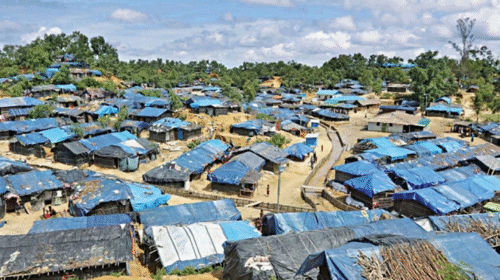




Cox’s Bazar correspondent: 95 children are born every day in Rohingya camps. The Rohingya population may increase from 12 to 13 lakh by 2025.Besides, more than five thousand Rohingya women are active in the body trade in different hotels in Cox’s Bazar.
This information was provided in a report presented at Parliament House by the Parliamentary Committee on the Ministry of Defense.
The Cox’s Bazar Rohingya camp area is said to be vulnerable to HIV/AIDS, Hepatitis C, and Diphtheria.So far, 710 people have been diagnosed with these diseases. 612 of them are Rohingya. As of December 22, last year, 61 Rohingyas had died of HIV/AIDS.
According to the report, seven dacoit groups, including Arsa, and three terrorist groups are active in the Rohingya area. Arsa has control over most of these camps. The Tambru Konapara camp, located on the Zero Line, has become a hub for ARSA organizational activities, training, drug smuggling, and terrorist activities due to the inability to strengthen regular patrols and surveillance. Ten rogue groups are active in Rohingya camps. Among them, Arsa is active in Ukhia, Balukhali, Palangkhali, and Huaikyong; RSO and Master Munna Dal are at Ukhia and Palangkhali; Islami Mahaj and Jabu dacoit gangs are active in Hoikyang and Nayapara camp; Chakma dacoit gang, Nabi Hussain dacoit gang, Putia dacoit gang, Salman Shah dacoit gang, Khalek dacoit gang, and Khalek dacoit gangs
Stating that Arsa has control over most of the camps, it is also said that Arsa and Nabi Hussain bandit gangs often clash for dominance. Murders occur. Arsa’s presence and their suspicious activities pose a security risk.
The report highlights the criminal activities that took place in 2021 and 2022. Their overall crime appears to have decreased somewhat. However, during this time, the killings increased. In 2021, 22 murders occurred; in 2022, it increased to 32.