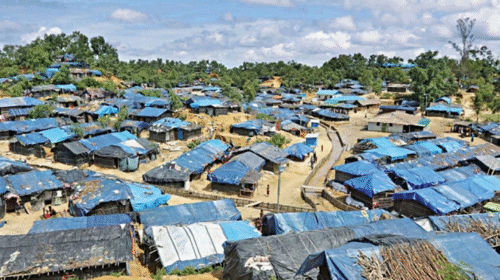



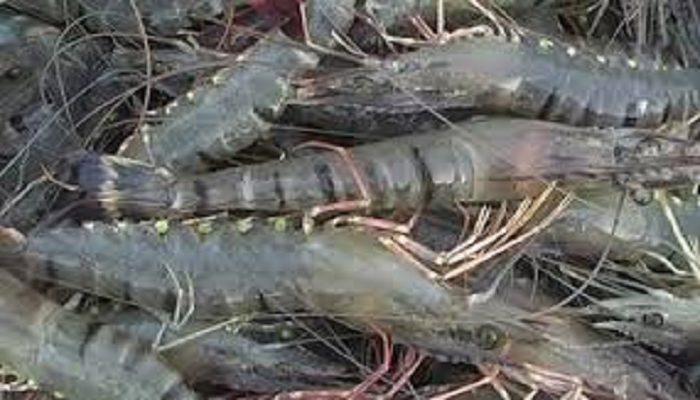
The Crime Desk: The salt season has basically ended since the rains caused by Cyclone Remal. Prawn farming is starting in full swing on about 30,000 acres of land in the Maheshkhali coastal area of Cox’s Bazar as of this June. Cultivation has already started on 30% of the projects. After the salt cultivation was stopped, the work of renovating the enclosure and stocking the pona started. Although the demand for shrimp in the current global market has gradually increased, the export of shrimp has decreased amid the ongoing global economic crisis. The export earnings from the shrimp sector in the fiscal year 2022–23 were $300 million. Which is 26 percent less than the previous financial year. Such information has been reported by Research and Policy Integration for Development. Those concerned said that investment in shrimp production should be increased to increase exports. According to the sources of Cox’s Bazar District Directorate of Fisheries, at least 65,000 acres of land in the district will cultivate Bagda shrimp in the current season. Necessary advice and training have already been given to shrimp farmers.
Maheshkhali’s shrimp fry supplier, Mohammad Alam of Hariar Raham village in Hwanak Union, said that the demand for hatchery-produced fry is higher than local fry in this season. So far, 4/5 projects have supplied about 70 lakh shrimp. Demand will increase when cultivation starts in full swing. As the shrimp farmers were profitable last season, interest has increased among them this year.
Maheshkhali shrimp farmer Hwanak UP member Salim Sikder said that everyone is looking at the project because the price of Bagda shrimp is high at present. Therefore, the project work is going on at a fast pace. Many had stocked chicks in nurseries two months ago. However, due to the acquisition of several lands in the Dhalghata, Matarbari, and Hetalia Mouja areas of Maheshkhali for coal power projects, shrimp farming in Maheshkhali has reduced a lot. Cultivation will begin in the vast coastal areas of Maheshkhali, Kutubdia, Pekua, Chakaria, Ukhia, Teknaf, and Sadar upazilas of Cox’s Bazar district.
Meanwhile, shrimp exports have decreased amid the ongoing global economic crisis. The export earnings from the shrimp sector in the fiscal year 2022–23 were $300 million. Which is 26 percent less than the previous financial year. Such information has been reported by Research and Policy Integration for Development. Those concerned said that investment in shrimp production should be increased to increase exports. Apart from this, they are demanding subsidies in this sector, like agriculture. According to Research and Policy Integration for Development, the demand for shrimp is gradually increasing in the world market. Currently, the global shrimp market is worth 32.49 billion US dollars. Ecuador and India account for nearly half of the world’s shrimp market, according to the agency. The two countries occupy 23.9 percent and 23.5 percent of global demand, respectively. On the other hand, the occupation of Bangladesh has decreased to 1.49 percent. Other notable shrimp-exporting countries include Vietnam, Indonesia, Argentina, Thailand, and China.
Meanwhile, Bangladesh’s average shrimp yield is the lowest among the major shrimp-producing countries. In 2012, the amount of land under shrimp cultivation in the country was 2 lakh 79 thousand hectares, which decreased to 2 lakh 50 thousand hectares in 2022. Production has declined by 35 percent in the last 10 years. On the other hand, in the fiscal year 2013–14, the export income from the fisheries sector was 602 million dollars. But due to a shortage of raw materials and other reasons, revenue fell by $382 million in FY 2022–23. In other words, in 10 years, exports in this sector have dropped by half. Export earnings to the European Union and the United States fell by 42 and 29 percent, respectively.
Ashek Ullah Rafiq, President of the Shrimp Hatchery Association of Bangladesh (SEB) and Member of Parliament for Maheshkhali-Qutubdia Constituency, said that the present government has taken all necessary steps for the development of the shrimp sector through the Directorate of Fisheries. Although some land in Maheshkhali has been acquired for coal power projects, shrimp farming will continue as before if the filled canals are dug and the water flow is maintained. Plans should be taken to bring the chars raised in the western part of Maheshkhali under shrimp farming. He said that one of the export products of the country is shrimp. But those concerned in this sector are not getting the same facilities as agriculture. Subsidy should also be provided in the shrimp sector, like agriculture.
General Secretary of the Frozen Fish Traders and Importers Association of Bangladesh and newly elected Maheshkhali Upazila Parishad Chairman Mohammad Zainal Abedin said that shrimp is a major cash crop in Bangladesh earning foreign exchange. Maheshkhali Coast is a significant shrimp farming zone. Shrimp produced in Maheshkhali is making a significant contribution to the national economy. Therefore, shrimp farming should be modernized, and production should be increased by providing the necessary training appropriate to the era.