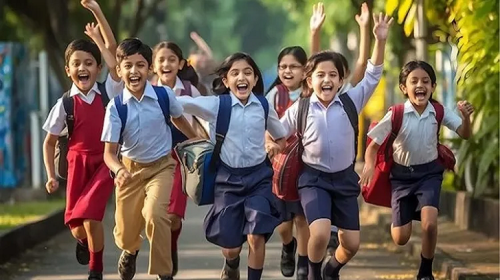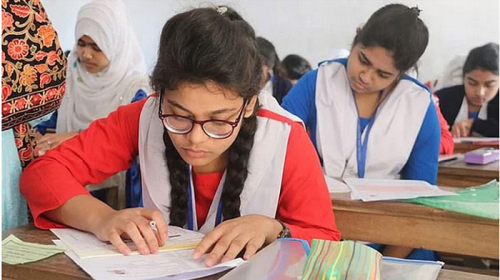



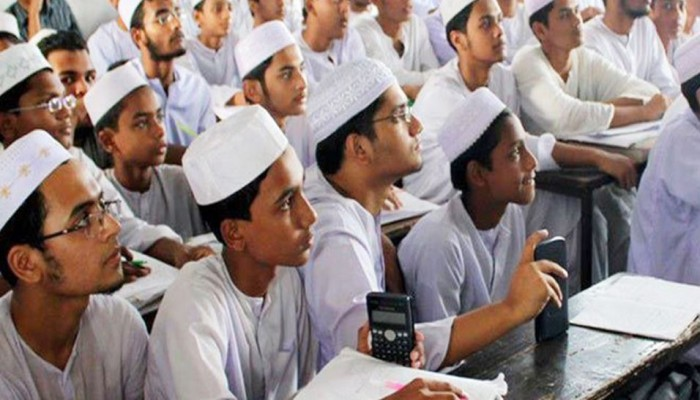
The Crime Desk: A part of the primary students are going to madrasas, as claimed by the top officials of the Ministry of Primary and Mass Education. And they are worried about it. He said that government primary school students are being forcibly demotivated. However, the Ministry of Primary and Mass Education does not have any statistics on how many students have been or are being taken in this way.
Deleted Additional Secretary of the Ministry of Primary and Mass Education. Nurjahan Khatun was speaking at a workshop organized with various stakeholders in education yesterday. He said there, “I have seen somewhere that madrasahs have been built right next to schools. Two institutions in one place. A school is another madrasah. Madrasa people are forcibly demotivating and taking away our students. It’s a matter of thinking.’ He said that those who pass through the madrasa stay inside that circle. They want to study in a madrasa to go to heaven. He said that going to heaven is not so easy. He requested the teachers and parents explain the matter.
Morcha Mass Literacy Abhiyan, an NGO working on education, also got information about primary students moving to madrasas. Their recently published research highlights the issue. In 2020, 70 percent of the students who passed class V will have been admitted to MPO and government secondary schools. About 21 percent attend kindergarten schools and NGO schools. About 3 percent of parents prefer to send their children to madrassas (Qawmi, private religious educational institutions, and aliyah, or government-sponsored madrassas). More than 3 percent of students transferred to technical and vocational education.
They found that in 2020, there was a noticeable trend of shifting to madrassas among both primary and secondary school students. The prevalence was significantly higher (6.4 percent) at the primary level than at the secondary level. Children generally study more in mainstream schools. When parents of madrasah-educated students were asked about their reasons for choosing a madrasah for their child, nearly two-thirds of parents cited religious reasons as the main consideration. One-fifth said madrassas were close to home and that madrassas were open during the pandemic and mainstream schools were closed.
Madrasahs have increased students in Madhyamik.
Bangladesh Bureau of Education Information and Statistics (BANBEIS) says that in the last four years, more than 1 million students have decreased in secondary level schools, but during this period, more than 250,000 students have increased in madrassas. According to the information provided by this government organization, before the start of the Corona virus epidemic, the total number of students in secondary schools in the country in 2019 was 92 lakh, 3 thousand, 427 people. After four years in 2023, this number has decreased to 81 lakh, 66 thousand, and 188 people. That is, 10 lakh, 37 thousand, and 239 students have decreased in four years. According to the data in the report, the number of students in Madrasas in 2023 was 27 lakh, 58 thousand, and 504 people. In 2019, it was 24 lakh, 91 thousand, and 268 people. That is, 2 lakh, 67 thousand, and 236 students have increased in Madrasa in the span of four years. The draft report did not point out the reason for the increase in madrasas due to the decrease in students in schools. However, not only the number of students in madrasas has increased, but the number of technical educational institutions is also increasing. At present, the total number of students in 5 thousand 395 technical educational institutions is about 750,000. Four years ago, it was like 7 lakhs.
A parent named Azizul Islam said that the school was closed for a long time after Corona. After opening, classes were held one day a week. Without the pressure of exams and studies, he was becoming careless in his studies. All his peers who were admitted to the madrasa had normal class activities. He has fallen behind in his studies. So I dropped out of school and enrolled in a madrasa.