



Dhaka Bureau: All over the primitive field is now yellow-green and the beautiful nature is breathtaking. Abundance of golden rice. The mind and soul of the farmer is floating in joy. The backyard will be filled with the smell of new rice. Advance has come. Give Him Him Hemant. Hemant’s life is renewed today. Mahendra time for harvesting the staple food of Bengali, Aman paddy.
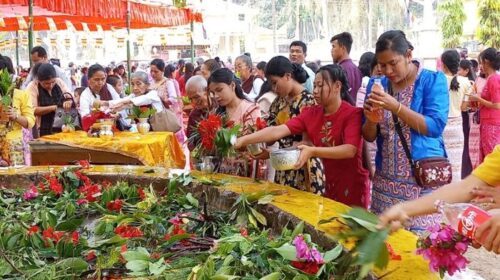
At the forefront of agrarian civilization, this Navanna festival has occupied the lives of Bengalis since time immemorial. Navanna festival is made with rice from new paddy. In Hindu folklore, this day is called the annual Manglik day. New Aman rice rice is eaten in different flavors, the village is filled with joy of Pithepuli festival. The girl was brought to her father’s house. There is a custom of praying in mosques before putting new rice in the mouth. In the Hindu farmer’s house, the puja is organized with great fanfare. This Navanna is the biggest Parban of the thirteen Parbans of twelve months of Hindus. They have twelve pujas around this Navanna. They offer new food to patriarchs, gods, animals like crows and after serving relatives, the householder and family members take new nabanna with new jaggery. In Hindu folklore, the food reaches the soul of the dead through the crow. This offering is called ‘Kakbali’.
Navanna festival has been organized all over the country including the capital Dhaka, Chittagong. Rural fairs will be held at different places. This fair will become a meeting place for people. From Navanna, the farmer brings home the ‘rashi rashi vara vara vara golden rice’. In the misty nature, the song of rice breaking floats in the wind of Hemant, the yard of the house is full of rhythm. Of course, the touch of the mechanics is no longer the mouth of the mouth. Still, the happy atmosphere did not fade away. On this day, he started collecting date juice for new rice cakes. New juice and new rice cakes have become an integral part of Bengali culture.
Researchers say that Navanna festival has been celebrated since the introduction of agriculture. Once Agrahayan was the first month of the Bengali year. ‘Agra’ means ‘first’. And ‘hayna’ means ‘month’. Secular history tells that in the past Navanna festival was celebrated mainly by the Hindu community in Bangladesh. After harvesting the paddy in Hemante Aman, the householders used to celebrate this festival in the month of Agrahayana or Paush. Poets and writers are full of praise and description of the various forms of nature in Hemante. The voice of Jibanananda Das, a nature poet who believes in reincarnation, echoes the desire to return again, ‘I will return again to the bank of rice stairs to this Bengal/ Maybe not as a human being, maybe in the guise of a conch shell;/ Maybe as a morning crow to the land of Kartik’s Navanna’. In the nature of Hemant, the poet Bivore describes, ‘The crops fall all around/ The dew drops from their breasts,/ The smell of abundant grain wafts/ The scent of owls and mice fills our tenant’s land.’
At present, harvesting and threshing of Agam Aman paddy is going on in different parts of the country. According to the Ministry of Agriculture, this is the second largest crop production period in the country. About 1 crore 3 million tons of aman is produced during this time. Rabindranath Tagore’s poem also expresses the joy of harvesting crops at home. “Dharar Anchal Bhere Dede Abundant Golden Paddy./Digangana Angan Aaj Purna Tomar Dane.” Even in cities like villages, especially since 1998 in Dhaka, the capital of Bangladesh, the official celebration of Navanna festival began. The National Navanna Festival Celebrations Council celebrates Navanna Festival every year on the Pahela Agrahayana date. Navanna Utsav 1429 has been organized today at Shilpakala Academy premises of 1 Agrahayan Dhaka.