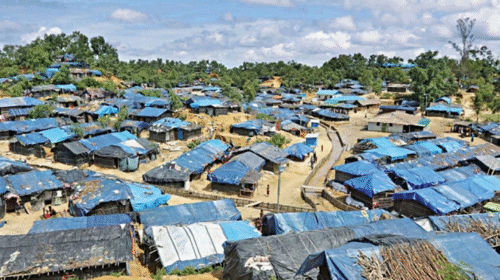




Dhaka Bureau: Economist Professor Dr. Abul Barkat said urban poverty should be determined by considering the socio-economic and political positions of slum dwellers. Slum Dwellers and Low Income The Khana Survey shows that at least 82 percent of slum and low-income dwellers are living below the poverty line. From here, it is possible to calculate urban poverty. 50 percent of the urban population is made up of slums and low-income households. 82 percent of whom are poor. As such, the coordinated efforts of public and private development organizations are necessary to reduce urban poverty.
On Monday (August 28) at 10:30 AM, Prof. Dr. Dr. Abul Barkat said this: Dr. Abul Barkat said the survey found that only 6 percent of poor households in the city have some agricultural land. Household food consumption is the first hit due to reduced income. According to the survey, only 12 percent of households feel that their family has food security. The remaining 88 percent of families are deprived of the necessary medical care and education to meet the additional food costs. An average of 65 percent of households in cities have access to improved sanitation, but only 16 percent of the urban poor do. in the discussion.
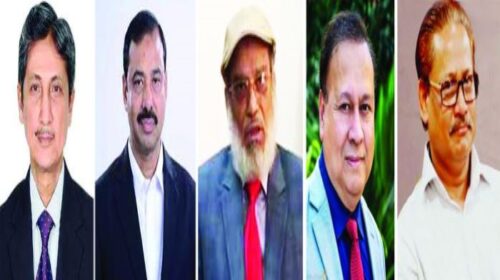
Dr. Shafiq Uz Zaman said that qualitative and quantitative changes are needed in the overall development strategy to alleviate urban poverty. Migration to cities is increasing due to the employment crisis in rural areas. But as there is no process of converting surplus agricultural workers into industrial workers in Bangladesh, there has been settlement rather than urbanization. He suggests thinking about alternative strategies for industrialization.
ALRD Executive Director Shamsul Huda said, Slum dwellers are not a burden for our country, but those who have illegally earned money and smuggled it are a burden. If they are given equal opportunities without doing injustice and discrimination to the slum dwellers, they will also be able to prove themselves as an asset to the country. Urban poverty is not a permanent problem; it is changeable. Therefore, he felt the need for integrated initiatives to eradicate urban poverty.
In the seminar president’s speech, Adv. Sultana Kamal said that the government is focusing on other issues without giving importance to the issue of good governance. He commented that if policymakers are aware and have the will, this situation can be changed by adopting and implementing specific action plans. Dr. Barisal participated in the open discussion. Manisha Chakraborty, Afzal Hossain from Rajshahi, Nurul Islam Dulu from Rangpur, Iqbal Bahar Saberi from Chittagong, and Imon Sarkar from Mymensingh