



Dhaka Bureau: The United States fears that China’s influence is increasing day by day in Bangladesh. Related sources said that India also has common interests with this attitude of the US. The US delegation is coming to Dhaka to understand the question of what will be the nature of Bangladesh-China relations in the future. Incidentally, a delegation led by US Under Secretary for Civilian Security, Democracy, and Human Rights Uzra Jaya will visit Bangladesh from July 11 to 14.
The delegation includes US State Department Assistant Secretary of State for South and Central Asia Donald Lu and USAID Asia Bureau Deputy Assistant Administrator Anjali Kaur. Those concerned said that neither the United States nor India favor ‘regime change’ in Bangladesh. Because they think that regime change will become a sanctuary for various militant groups, including IS and AQIS. Those concerned also said that the next election will be held in the country, like in 2008, and there is no reason for the Awami League to lose. And this is why the Awami League and the government are saying that there will be fair, free, and acceptable elections in the country.
Those concerned were reminded of the incident of 2001 and said that if Prime Minister Sheikh Hasina wanted to serve, she could have returned to power. But the patriot Sheikh Hasina did not like to return to power that way. As a result, there was a change of ruler, and Bangladesh became a semi-Taliban state. The US representative was informed in advance so that this did not happen. For this reason, the upcoming visit of the US delegation will not only talk about the Bangladesh elections. Many other issues will be discussed. Besides, many are saying through social media that ‘regime change’ is happening in Bangladesh. But the United States never once spoke about regime change. Last Thursday.
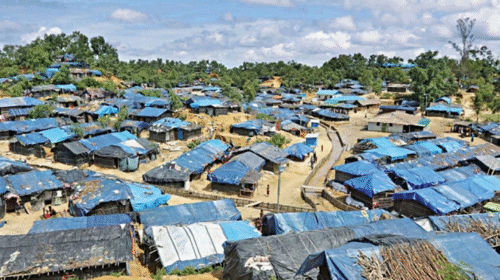
Foreign Secretary Masoud bin Momen said, The US delegation is coming for the election; it is not in our information. Many issues will be discussed here. One of them might be about elections; I’m not ruling it out. It is not correct that it is an election-centric tour. Masud bin Momen said, We have many mechanisms working with America. There are labor issues, and there are trade issues. They will even visit Rohingya camps. When asked, former foreign secretary and diplomatic analyst Shamser Mobin Chowdhury told the media that the election may be discussed during the upcoming visit of the US delegation. But they never said that there should be ‘regime change’ in Bangladesh.
They said free, fair, and acceptable elections. Everyone can say, Why is it the United States? Accordingly, the United States has a policy on the Indo-Pacific region. They want to work according to that principle. They want stability in the region to work. The United States believes that China’s influence can only be countered if there is stability in Myanmar, Nepal, Bhutan, and Bangladesh, including India’s northeast.
Meanwhile, the US Ambassador to Dhaka, Peter Haas, has started activities ahead of the US delegation’s visit. He recently returned to Dhaka from the USA. He went to Washington for regular consultations. The United States announced its visa policy on May 24. Under this policy, the United States will not issue a visa to anyone who obstructs the electoral process. There has been a commotion in the political arena in Bangladesh over the visa policy. The United States has been repeatedly saying that this visa policy has been announced to help hold free and fair elections in Bangladesh. Bangladesh is also giving assurances in this regard. Peter Haas returned to Dhaka and held meetings with various levels of officials at the Prime Minister’s Office.
He also visited the Bangladesh Garments and Industrial Workers Federation office in the capital. On the other hand, Uzra Zeya, the Undersecretary for Civilian Security, Human Rights, and Democracy of the US Department of State, held a meeting with the Ambassador of Bangladesh in Washington, Muhammad Imran, ahead of his visit to Bangladesh. Yesterday on Twitter, Uzra Zeya said about the meeting that there was a fruitful discussion with the Ambassador of Bangladesh to the United States, Muhammad Imran, aimed at democracy, human rights, fair labor practices, and humanitarian cooperation.
I look forward to deepening our strong partnership. A thinker of the Bangladeshi community in the United States, who did not want to be named about the meeting with Ambassador Mohammad Imran, told the media that for the past few months, various important people of the Biden government in Washington, including Congressmen, have been provided letters and important documents, asking whether you (the United States) will change the ruler in Bangladesh. That’s up to you. But you should know that if there is a change of ruler in Bangladesh, there will be another Afghanistan. Because there was a change of ruler in 2001.
Then the country became semi-Taliban. After the various activities of the White House, the Bangladeshi thinkers in the United States realized that, at least 99 percent sure, the ruler is not changing in Bangladesh. However, they will want to know from the Bangladesh government what the future relationship of Bangladesh with China will be.
It must be remembered that the US and India are working closely together to contain China in this region. According to diplomatic sources, the United States will not give any formula regarding the election. The United States has no comment on the demands of the caretaker government of the BNP. However, Washington’s interest in fair elections