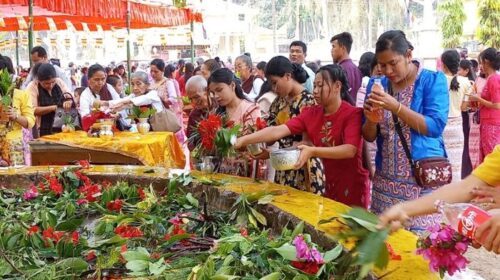




Ishwardi Correspondent: The mosques and temples built in the Baharpur Shelter Project in Ishwardi have forged bonds of communal harmony among the landless. Hindus and Muslims are practicing their respective religions in a harmonious environment.
Although there was an allocation for the construction of houses in the project, there was no allocation for the renovation of the mosque or the construction of the temple. But the Ishwardi upazila administration has tried to restore the mosque and build the temple.
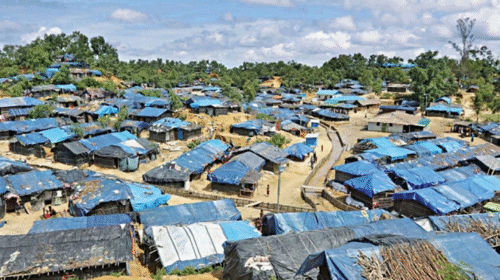
It has been seen on the ground that a total of 316 landless families are living in the Baharpur shelter project of Muladuli Union along the Ishwardi-Pabna road. The Hindu community has 25 families. A total of two thousand people live there. First, there were 96 houses. This year, 196 houses have been allocated under the Prime Minister’s priority-based shelter project for the homeless and landless, but 220 houses have been constructed with the efforts of the upazila administration. These houses are allocated between Muslim and Hindu communities. Along with the renovation of the old mosque and the construction of the temple, the people of the Hindu community can now regularly worship here.
Bablu Chowdhury, the beneficiary of the facility, said that now there is no need to go to the temple in Ishwardi town or Dashuria, which is eight miles away, for worship. I am happy and at peace because UNO made it a temple.
Dilip Das said that UNO Sahib built the temple. I am Hindu and Muslim together.
Bhumihin Farooq Hossain, president of the cooperative society of the project, said, “We are living like relatives, sharing each other’s happiness and sorrows. We enjoy all our Eid, Shabbat, Milade, and Hindu pujas. UNO came twice a week and inquired. If there is a problem, he solves it immediately.
Upazila Executive Officer Imrul Kayes said that people of different communities live in Ishwardi. Here I have allotted the real estate of the Hindu community and houses for the homeless. There was already a mosque for the Muslim community, and along with its renovation, we built the temple, thinking about the religious freedom of the Hindu community. The temple construction cost not even half of the money allocated for the TR project.
He said that the temple was built using bricks, cement, tin, and sand left over from the shelter project. The incomplete work of the temple will be done in phases.