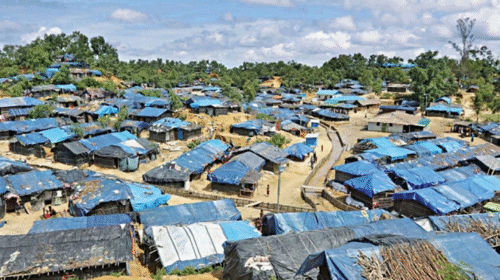




Cox’s Bazar Representative: The fresh water crisis is becoming evident everywhere in Cox’s Bazar. The underground water level is gradually decreasing in most of the areas of 72 unions in 9 upazilas, including the district town. About 1,000 of the district government’s 31,000 tube wells have become useless. Water is not rising in thousands of tube wells. The crisis is similar on the coastal plain. Suffering also increased in the shelter camp of Ukhia-Teknaf.
Mostafizur Rahman, Executive Engineer of Cox’s Bazar Directorate of Public Health Engineering, said that this suffering is due to lack of rain and high temperatures. Drinking water is being supplied by car to some areas in upazila cities, including Sadar. If it is not possible to provide surface water, he is of the opinion that this crisis may increase in the future.
According to Cox’s Bazar Municipality and the Public Health Engineering Department, numerous shallow tube wells in different areas of Cox’s Bazar city have become useless. The groundwater level in Cox’s Bazar is decreasing at a rate of 10 to 11 feet every year. Even 10 years ago, the ground water level was found to be between 120 and 150 feet in the Tekpara area of the city. But now we have to go more than 300 feet deep for water. In the past few years, the groundwater level in the Kalatali area of Cox’s Bazar Sagarpar has dropped by 10 to 15 feet. As a result, numerous water pumps serving more than 300 residential hotels in Sagarpar have become useless. The Cox’s Bazar Environment Directorate believes that this situation is due to excessive use of underground water.
Concerned persons say that this situation has arisen due to the unplanned pumping of water with shallow machines and the filling of ponds, canals, and dams everywhere. If there is no rain ahead, the situation will deteriorate further.
It is known that in different areas of Cox’s Bazar, the water level is usually 30–35 feet below the ground. But the water level has dropped to 50 to 60 feet in some areas. Due to the lack of rain for a long time, the natural sources of water in those areas are gradually becoming empty. This has led to a deadlock in household work. Farmers are afraid of water shortages in boro cultivation.
The victims said that the water crisis occurred before the start of summer. Most of the tubewells do not produce water. Although there is an opportunity to buy water in the city, tube wells are the only source of drinking water in the villages. Many in the village have to go far to fetch a pitcher of potable water. After that, water is available. And those who are not able to pass this long way have to buy drinking water in exchange for money.
Saiful Islam of Kharulia Konarpara in Cox’s Bazar Sadar said that their motor has not been getting water for a long time. They have to suffer a lot. The same is the case around them. However, at a distance of one and a half hundred yards from their house, the Bankkhali River, the source of fresh water in Cox’s Bazar, flows.
Drinking water problems exist in various areas of Eidgaon, Vaditla, Collegegate, Palakata, Navnumhal, Chaufaldandi, Pokkhali, Gomatli, Jalalabad, Islampur, Islamabad, Teknaf, Ukhia, Pekua, Chakria, Maheshkhali, Ramu, and Kutubdia.
Hasan Mahmud Sujan, a social worker in Kutubdia, said that water is not available from manual tube wells in most areas of the upazila, including North Dhurung, Dakshin Dhurung, Lemsikhali, Koyarbil, and Baraghop Union.
Jahangir Alam, an environmental activist in Teknaf, said that the people of Kayukhalipara, Chowdhurypara, Bus Station, Pallanpara, and Nightongpara in the municipality are meeting the demand by collecting water from the mountain spring.
According to Cox’s Bazar Nature and Animal Researcher Ahmed Ghiyas, unplanned urbanization is causing excess pressure on the groundwater level due to the reduction of open spaces and reservoirs.
Cox’s Bazar Public Health Engineering Directorate Executive Engineer Mostafizur Rahman said that the level of underground water in the country is going down rapidly. Rainwater conservation and increased use of pond, lake, or river water should reduce pressure on groundwater.
According to a survey of the water resources engineering department of the Bangladesh University of Engineering (BUET), if the dependence on groundwater is not reduced, the water level will drop by 10 meters every year.