


The Crime Desk: Instead of white or blue, the sky is gray now. Especially in Dhaka. It does not rain, even in full monsoon. Monsoon flowers, including cumin, do not bloom. Winter is not seen in winter. The greenery is disappearing under the pressure of tall buildings. The intensity of the heat is constantly increasing. The familiar environment is changing little by little due to soil, water, and air pollution. The climate is also changing. Which has an adverse effect on biodiversity and public health in every field. Globally, pollution is now seen as a ‘disaster’.
According to the data from a global study, Dhaka is number one among the cities in the world in terms of noise pollution, and Rajshahi, another city in the country, is number four. Dhaka has been at the top of the world in terms of air pollution. Bangladesh is at the top among Asian and Pacific countries in river water pollution. Bangladesh ranks 8th in the world for dumping plastic waste into the sea. And the country is covered in polythene bags. In recent years, plastic pollution has occurred not only in Bangladesh but in all developed and underdeveloped countries as well. In this way, people have threatened the earth and their own existence through environmental pollution.
Meanwhile, according to a World Bank report, Bangladesh is one of the countries most affected by pollution and environmental risks. The poor, children under five, the elderly, and women are the worst hit. More than 272,000 people die prematurely due to severe pollution. These premature deaths are caused by air pollution, unsafe water, poor sanitation and hygiene, and lead pollution. Indoor and outdoor air pollution have the most detrimental health effects, accounting for 55 percent of premature deaths. 28 percent of all deaths in the country every year are due to diseases caused by environmental pollution. But worldwide, such deaths average only 16 percent.
According to a recent UNICEF report, one in three children in the country, or about 20 million children, is affected by climate change every day. By 2050, a total of 99 percent, or 35.5 million children, in the country will face extreme heat waves. This number is significantly higher than in 2020. In 2020, only 2.6 lakh children, or 5 percent of the country’s total, faced such risks.
Scientists say that the whole world, including Bangladesh, is in a very dangerous situation in terms of climate change. Humans are constantly destroying nature, and nature is taking its revenge, leading to the extinction of human civilization. Continued climate change, destruction of the natural environment, and biodiversity
The world is now at such risk due to various types of pollution. Experts believe that if vigorous action is not taken in this regard now, the harmful effects of environmental pollution on the poor and vulnerable people will be much greater, which will further weaken the development speed of the country.
Environmental activists have been saying for a long time that the country’s environment is in crisis due to encroachment, filling, pollution of rivers, deforestation, mountain cutting, unplanned urbanization, water and air pollution, industrial pollution, the use of excessive and harmful pesticides, and excessive extraction of underground water. To save the country, the environment must be saved first.
Although various initiatives were taken in this regard, they were complaining of a lack of coordination. Meanwhile, after assuming responsibility, Minister of Environment, Forestry, and Climate Change Affairs Saber Hossain was told to take special initiatives to create a favorable environment, including the prevention of air pollution, plastic pollution, hill cutting, and filling of reservoirs within the 100-day program. Actions are being taken accordingly. Environmentalists applauded such an initiative by the ministry. There is some relief among them.
Bangladesh’s environmental protection movement leader and preventive medicine expert, Dr. Lelin Chowdhury, says that environmental pollution has several parts. Such as air pollution, water pollution, food pollution, noise pollution, etc. Due to this pollution, people are being harmed in one way or another. Some damage is direct. For example, a child died after eating pesticide-laced litchi, or someone fell ill after eating poisonous fish. Again, some damage is long-term. For example, someone’s kidney has been destroyed by mixing chemicals or pesticides or eating poisonous food. or contracted a lung infection from long-term exposure to polluted air.
Experts say that it is not enough to look only at the government or authorities to avoid environmental pollution. You must first be aware of the importance of the importance of protecting the environment. Laws must be enforced, and we must also be careful not to cause air pollution, water pollution, or noise pollution.
In a recent event, Environment Minister Saber Hossain Chowdhury urged everyone to come forward to control pollution. He said that due to noise and air pollution, people are suffering economically as well as physically. So every citizen has to work to control pollution from his own place. We are doing noise pollution or air pollution in various ways, which is affecting the health of others. All concerned authorities should come forward with proper implementation of laws to deal with air and environmental pollution.
Meanwhile, the Environment Minister has proposed the formation of a parliamentary caucus to implement the promises of public representatives to prevent environmental pollution, planned urbanization, and river pollution. Also, reduce the use of single-use plastics by 90 percent by 2026; include environmental conservation and climate change issues in the curriculum for students from class III to class VIII next year; Withdrawal of more than 73 thousand bus trucks to prevent increasing air pollution across the country, including Dhaka; eviction of illegal brick kilns; brick kiln mapping and pollution detection through artificial intelligence; and river pollution detection through drones Overall, the initiatives of the Ministry of Forest, Environment, and Biodiversity’s strategic planning are seen as positive by environmentalists.
Lelin Chowdhury said the level of our environmental pollution has long exceeded. A constructive action plan is needed now. The initiatives being taken in that direction are very important. Single-use plastics are deadly. We have been talking about it for a long time. Institutional importance has never been given to this issue. If these initiatives are implemented, good things will definitely happen in the future. Some believe that development and environmental protection cannot go hand in hand. In this context, Saber Hossain Chowdhury said that the environment is also a matter of individual and public health. According to the constitution, all development should be done keeping in mind the issue of public health protection. Public health should be given importance.
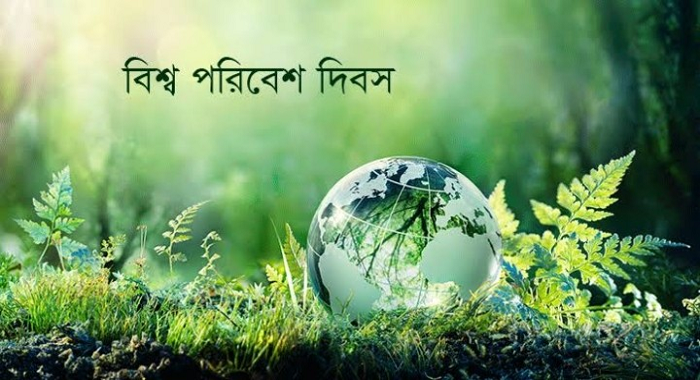
In this context, World Environment Day is being celebrated today. Since 1974, June 5 has been observed as ‘World Environment Day’ every year under the leadership of the United Nations Environment Programme. This year, the theme of the day is ‘Karab Bhoomi Reclamation, Rukhab Marumoyata; Must Acquire Drought Tolerance. And the National Tree Planting Campaign and Tree Fair will be held with the motto ‘Decorate the country with trees, enrich Bangladesh’. Prime Minister Sheikh Hasina will inaugurate the Environment Fair and Tree Fair at Bangabandhu International Conference Center on the occasion of Environment Day.
The Prime Minister will inaugurate the National Tree Plantation Program by planting two saplings of Palash and Bel trees on this day. The environment fair will run from June 5 to June 11, and the tree fair will run from June 5 to July 13. The fair will run daily from 9 a.m. to 8 p.m. The Bangabandhu Award for Wildlife Conservation 2023 and 2024, the National Environment Medal 2023, the Prime Minister’s National Award for Plantation 2022 and 2023, and dividend checks will be distributed among the beneficiaries of social forestry at the inauguration ceremony. On the occasion of Environment Day, children’s painting, educational institution debates, and slogan competitions are organized. Tree fairs will be organized at national, divisional, district, and upazila levels. On this occasion, a painting and writing competition has been organized for children. Tree saplings will be distributed to various educational institutions.